
PART 1
I came home two days earlier than anyone expected, carrying a bottle of red wine and a box of pastries I thought would make my wife smile.
My conference in Columbus had ended ahead of schedule, so instead of wasting two more nights alone in a hotel room, I booked the earliest flight home. I didn’t call Sarah. I didn’t text our son, Michael. After twenty-three years of marriage, I still loved surprising my wife.
But the moment I pulled into our street, that warm feeling disappeared.
Michael’s SUV was parked outside.
The porch lights were on though the sun had not gone down. The front door was slightly open. Inside, the house smelled like lemon cleaner, but beneath it was something sharper.
Then I saw Sarah.
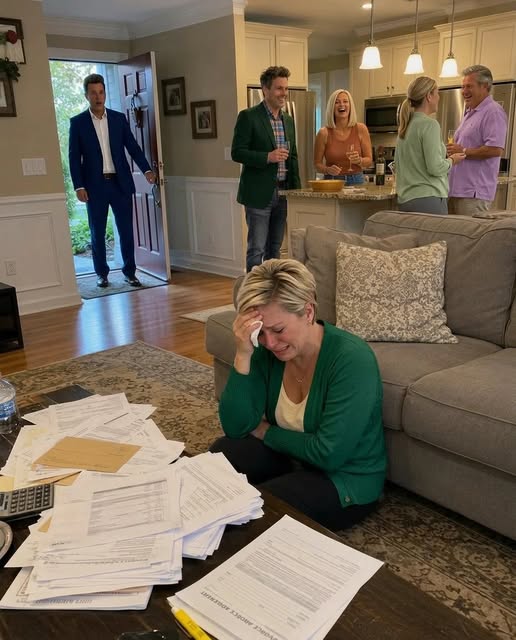
She was on the living room floor, leaning against the sofa, one hand pressed to her eyebrow. Blood had run down her face and stained the collar of her cream shirt.
The wine slipped from my hand. The pastries fell to the floor.
“Sarah,” I whispered, dropping beside her. “What happened?”
Before she could answer, laughter came from the kitchen.
Michael’s laugh. Olivia’s quiet chuckle. David’s voice. Jessica’s glass hitting the table.
My wife was bleeding ten feet away, and they were laughing.
Then Sarah whispered, “I tried to make them leave. I wouldn’t sign.”
That was when I saw the folder on the coffee table.
Property documents.
A deed draft.
Papers for the beach house her mother had left her.
PART 2
For weeks, Michael had been pressuring Sarah to sell that house.
He said David’s restaurant only needed temporary money. He called the beach house an “asset.” He told her she was being emotional because it had belonged to her mother.
But to Sarah, that house was not an asset.
It was her mother’s garden. Her mother’s kayak. Her mother’s kitchen. Her childhood memories.
Michael knew that. And he used it against her.
Sarah told me he had grabbed her arm. When she pulled away, she hit the corner of the coffee table.
For one moment, I wanted to storm into the kitchen.
Instead, I took out my phone.
I photographed Sarah’s injury, the blood on the rug, and the open folder. Then I called 911.
When Sarah grabbed my sleeve, I thought she was trying to stop me.
But she only whispered, “Don’t let them take it.”
I squeezed her hand. “They won’t.”
Then I walked into the kitchen.
Michael’s face changed the second he saw me. He wasn’t shocked because his mother was hurt. He was shocked because I had come home too soon.
I placed my phone on the counter with the 911 call still active.
“Nobody moves,” I said.
David tried to call it a family matter.
I told him to sit down.
Then Sarah called from the living room, “Check the second page.”
Under the deed, I found another document. It directed the money from the sale into a business account.
Sarah had not been told that part.
Michael snapped at Olivia when she said she didn’t know.
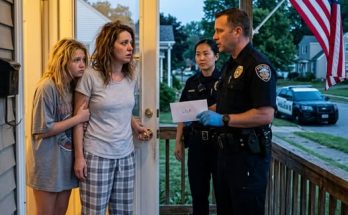
Then the sirens arrived.
PART 3
The police separated everyone. The EMTs treated Sarah. Michael tried to say it was an accident. David claimed he never touched her. Olivia cried, but not for Sarah — for herself.
At the hospital, Sarah needed stitches, but no serious damage was found. Still, what hurt most was what she said while waiting behind the curtain.
“I almost let him make me feel rude for saying no.”
The next morning, we read every page in that folder.
Nothing had been signed. Nothing had been filed. The beach house was still Sarah’s.
We changed the locks.
Taking Michael’s old key off the ring made Sarah cry harder than the stitches had.
“He grew up here,” she said.
“He is welcome here,” I told her. “That doesn’t mean he gets a key.”
Weeks passed. Michael sent excuses first, then anger, then blame. Finally, he wrote that he had only been desperate.
Sarah replied with one sentence:
“You can’t call it desperation when the plan required my silence.”
Months later, the restaurant closed. Michael moved away. The beach house remained in Sarah’s name.
In December, Sarah visited it alone. In April, she went again.
This time, she called me from the porch and said, “It feels like mine now.”
One evening, after the bruises had faded, Sarah stood on our front porch and said quietly:
“I’m not signing anything I don’t want to sign. Not now. Not ever.”
And that is the sound I choose to remember.
Not the laughter from the kitchen.
Her voice.
Clear. Calm. Final.
Not now.
Not ever.