PART 1 – Three Knocks Under the Kitchen
I came home for Christmas after twelve years away, expecting to surprise my elderly parents.
Instead, my sister Vanessa opened the door and said, “Mom and Dad aren’t here. They decided to spend the holidays with relatives.”
For a few seconds, I believed her.
Then she named Uncle Raymond.
Uncle Raymond had been dead for four years.
I didn’t correct her.
I simply carried my suitcase inside and started paying attention.
My name is Michael Carter. I was forty-six that Christmas, and for the previous twelve years I had lived nearly nine hundred miles from the small Virginia town where my sister and I grew up.
I hadn’t left because of some great family feud.
I left because opportunity kept moving farther away.
One truck became three.
Three became a regional freight company.
Then warehouses.
Then contracts.
Then employees whose paychecks depended on me showing up every Monday morning whether I was tired, sick, lonely, or homesick.
Every Christmas I told myself the same thing.
Next year.
Next year I would go home.
Instead, I sent money.
Thirty-five hundred dollars a month during the last several years.
Sometimes more.
Medicine.
Property taxes.
Repairs.
Groceries.
Whatever my parents needed.
I had convinced myself that providing from a distance counted as being present.
Then, three weeks before Christmas, my father stopped answering my messages.
Vanessa said his phone was broken.
My mother stopped replying a few days later.
Vanessa said Mom’s arthritis had gotten worse.
Something about the explanations bothered me.
So on December 22, I told my operations director I was taking ten days off, got into my SUV, and drove through the night.
No warning.
No call.
I wanted to see my parents’ faces when I walked in.
Instead, I saw Vanessa’s.
“What are you doing here?” she asked before replacing the question with a smile.
“Merry Christmas to you too.”
She hugged me.
Too quickly.
Then stepped backward and blocked part of the doorway.
That was the second thing I noticed.
The first had been Uncle Raymond.
“Where are Mom and Dad?”
“With family.”
“Which family?”
“Raymond.”
I looked at her.
“Raymond?”
She blinked.
“I mean his son. Kevin. You know what I meant.”
I didn’t.
But I entered anyway.
The house looked better than I remembered.
Fresh paint.
New sectional sofa.
Huge television.
New appliances.
A Christmas tree tall enough to belong in a department store window.
Vanessa had apparently been doing well.
She had moved back into town two years earlier after a failed boutique business in Richmond.
At least that was what she had told me.
“I’ve been taking care of everything,” she said. “The house, the bills, their appointments. They’re not as independent as you remember.”
I put my suitcase in the hallway.
That was when I saw Dad’s reading glasses on the kitchen table.
One arm had snapped completely off.
My father couldn’t read a restaurant menu without those glasses.
He owned three pairs, but the brown ones on the table were the pair he wore every day.
His winter coat was hanging beside the back door.
His boots were beneath it.
Outside, the temperature was thirty-one degrees.
“You said they left yesterday?”
“Two days ago.”
“With no coat?”
“They had another one.”
I nodded.
Then I saw my mother’s pill organizer.
Seven plastic compartments.
Monday through Sunday.
Every section still full.
Vanessa moved quickly.
“She has another set in her travel bag.”
“Okay.”
I didn’t argue.
That made her visibly relax.
During the afternoon, I walked around the house.
My parents’ bedroom door had a new keyed lock.
The family photo that used to hang above the mantel had been replaced by a large abstract painting.
Dad’s old recliner was gone.
So was Mom’s sewing machine.
Their little grocery store across the road had been closed for “renovation,” according to Vanessa.
At four that afternoon, I walked to the town square.
People recognized me.
That surprised me.
Mrs. Bennett from the pharmacy touched my arm.
“Michael Carter?”
“Yes, ma’am.”
“My goodness.”
Then her smile disappeared.
“I’m glad you came.”
Something in her voice made me stop.
“Why?”
She looked toward the café.
“You need to talk to your father’s friend Warren.”
Warren Ellis had known Dad since high school.
I found him outside the hardware store.
When I told him Vanessa said my parents were visiting family, his expression changed.
“Michael.”
“What?”
“Nobody has seen your parents in months.”
The cold suddenly felt sharper.
“How many months?”
“At least three.”
“Are you sure?”
“Your dad missed the veterans’ breakfast in September. He hasn’t missed that breakfast in twenty-two years.”
My mother hadn’t attended church.
Dad hadn’t picked up prescriptions.
Their grocery store had remained closed.
Every time someone asked Vanessa, the answer changed.
They were sick.
They were visiting friends.
They were resting.
They were staying with me.
“That last one was especially strange,” Warren said.
“Why?”
“Because you’re standing here.”
That evening, I went back to the house.
I behaved normally.
I ate Vanessa’s chicken casserole.
I asked about her life.
I even laughed when she complained that Mom and Dad had become “stubborn.”
At ten thirty, I told her I was exhausted from driving.
She went upstairs.
I stayed awake.
At 2:07 a.m., I heard it.
Knock.
I sat up.
Silence.
Then:
Knock.
Another pause.
Knock.
Three weak, deliberate sounds.
They came from beneath the kitchen.
I walked barefoot into the hallway.
Nothing.
Then again.
Knock.
Knock.
Knock.
And suddenly I remembered something I had not thought about since childhood.
My grandfather had built an underground storage cellar beneath the kitchen in the 1960s.
Potatoes.
Canned food.
Storm supplies.
The entrance was hidden behind a large pantry cabinet.
I pushed the cabinet.
It had fresh scratches along the floor.
Behind it was the cellar door.
And hanging through the metal loop was a brand-new padlock.
I stood there staring at it.
That was when I stopped asking whether Vanessa was lying.
I started asking who she was trying to keep under my parents’ house.
The next morning, Vanessa announced she had errands in town.
“What errands?”
“Bank. Grocery store. Christmas things.”
She was watching me too carefully.
I smiled.
“Pick up coffee?”
Her shoulders relaxed.
“Sure.”
I waited until her car disappeared.
Then I went to Dad’s old shed.
When I was a kid, my father hid spare keys in an empty Maxwell House coffee can behind his workbench.
The can was still there.
Inside were six old keys.
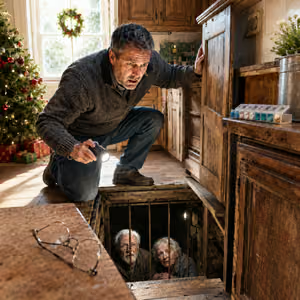
The fourth opened the cellar door.
The smell hit me first.
Damp concrete.
Mildew.
Human waste.
I turned on my phone flashlight.
“Dad?”
Nothing.
I descended.
“Mom?”
Breathing.
Weak.
At the far end of the cellar, someone had installed a metal partition.
Behind the bars were two mattresses.
A bucket.
A folding chair.
Two blankets.
And my parents.
My mother had lost so much weight I barely recognized her.
Dad tried to stand and couldn’t.
“Michael?”
Mom’s voice cracked.
I ran toward the gate.
She pushed both hands through the bars.
I grabbed them.
“Oh my God.”
She started crying.
“She said you weren’t coming.”
“Who?”
Dad closed his eyes.
“Your sister.”
My hands tightened around the bars.
“How long?”
“Four months.”
I was reaching for my phone when I heard footsteps above.
Slow.
Then the cellar door opened.
Vanessa appeared halfway down the stairs.
She had returned without the coffee.
A thick legal folder was tucked beneath her arm.
Her face held no surprise.
Only anger.
“I told you not to come down here.”
I stepped in front of my parents.
“Open this gate.”
“You don’t understand what’s happening.”
“Open it.”
She laughed bitterly.
“You disappear for twelve years, and now you’re the hero?”
“Vanessa.”
“Mom and Dad became impossible.”
Dad gripped the bars.
“You locked us down here.”
“You were trying to destroy everything!”
“What everything?” I asked.
She looked at me.
That was when she realized she had said too much.
I stepped closer.
“What did you do?”
Vanessa clutched the folder.
“The house already has a buyer.”
My mother gasped.
“What?”
“The closing is January second.”
Dad shook his head.
“I never signed anything.”
Vanessa went pale.
I understood immediately.
“You forged his signature.”
She backed toward the stairs.
A sheet of paper slipped halfway out of the folder.
I saw my father’s name.
Then my mother’s.
Then a heading that made the house sale suddenly look like the smaller problem.
AMENDED AND RESTATED CARTER FAMILY TRUST
Under it was an account number.
And a handwritten valuation:
Approximately $742,000.
My parents didn’t just have a house Vanessa intended to sell.
She was preparing to take everything they had left.
And if I had arrived two weeks later, she might have succeeded.
PART 2 – I Had Called the Police Before I Went Down
Vanessa thought we were alone.
We weren’t.
Before opening the cellar that morning, I had done one thing my younger self probably would not have done.
I called for help.
I told Warren what I had heard.
Then I called the sheriff’s non-emergency line and explained that my elderly parents had been missing from public life for months and that I had discovered a locked underground room beneath their house.
The dispatcher told me not to confront anyone if I felt unsafe.
I promised I wouldn’t.
Then I went down anyway.
That part probably wasn’t smart.
But I did leave the cellar door open.
And I sent Warren one text before descending.
If I don’t come back up in ten minutes, send them in.
Vanessa stood three steps above me.
“Give me that folder,” I said.
“No.”
“Then open the gate.”
“They’re safe.”
I looked at my mother.
She had a bruise along one forearm.
Dad’s beard was nearly white and several inches longer than I had ever seen it.
“Does that look safe to you?”
“You don’t know how they’ve been acting.”
Mom whispered:
“She stopped giving me my heart medicine.”
Vanessa snapped around.
“That is a lie!”
Dad shouted from behind the bars:
“You took her pills because you said they made her confused!”
“They did!”
“You’re not a doctor,” I said.
Vanessa pointed at me.
“And you’re not a son.”
That landed.
Because it was partly true.
Not literally.
But emotionally.
I had missed twelve Christmases.
I had missed Dad’s minor stroke six years earlier.
I had missed Mom’s knee replacement.
I sent checks.
Flowers.
Money.
I called.
Then calls became texts.
Then texts became transfers.
Vanessa had been here.
At least at first.
“You’re right,” I said.
That surprised her.
“I should have been here more.”
Dad looked at me.
“But that doesn’t explain the lock.”
Vanessa’s mouth tightened.
“They were trying to ruin my life.”
“How?”
“They wanted to kick me out.”
Dad laughed weakly.
“You stole from us.”
“I borrowed money.”
“You sold Mom’s jewelry.”
“You weren’t using it!”
Mom began crying.
Vanessa continued as though she hadn’t heard.
“Dad tried to revoke the power of attorney. He was going to call you and tell you everything.”
“So you locked them up.”
“I needed time.”
The sentence was so simple I almost missed how monstrous it was.
Time.
Four months of it.
My father lifted his chin.
“She wanted us to sign the house away.”
“I was selling it for all of us.”
“Whose name is on the sale?”
Dad demanded.
Vanessa didn’t answer.
I heard tires outside.
Then car doors.
Vanessa heard them too.
Her face changed.
“What did you do?”
“Nothing dramatic.”
Boots crossed the kitchen above us.
“Sheriff’s department!”
Vanessa backed against the stair rail.
“Michael.”
I said nothing.
Two deputies appeared.
Behind them was an EMT.
Everything after that moved quickly.
The gate was opened with Vanessa’s keys.
My parents were carried upstairs.
Mom could walk only with assistance.
Dad refused a stretcher until his knees gave out beside the kitchen table.
Vanessa began talking.
Fast.
Her parents had dementia.
They wandered.
Dad was violent.
Mom was confused.
The cellar was temporary.
The lock was for safety.
The deputies did not argue with her.
They separated everyone.
That is what competent police officers do.
They collect statements.
They don’t decide an entire case because one person tells a convincing story.
One deputy asked me to stay outside.
I watched the ambulance leave with my parents.
Vanessa was still inside.
Twenty minutes later, a second patrol car arrived.
Then an investigator from adult protective services.
The legal folder was placed inside an evidence bag.
The cellar was photographed.
Medications were collected.
The new lock on my parents’ bedroom was documented.
Vanessa came out nearly an hour later.
She was not in handcuffs yet.
That surprised me.
I had expected justice to look immediate.
It didn’t.
The deputy explained quietly:
“We have enough to separate everybody and continue investigating. Decisions about charges will be made after we have medical information and statements.”
Vanessa stared at me.
“You ruined everything.”
I almost answered.
Then stopped.
Because that sentence told me how she saw the situation.
Not:
You found them.
Not:
They’re safe.
You ruined everything.
I followed the ambulance to the hospital.
Dad had dehydration, a urinary infection, severe weakness, and poorly controlled blood pressure.
Mom was malnourished and had gone without two prescribed medications often enough to create a serious problem.
Neither had advanced dementia.
Dad had normal age-related memory changes.
Mom had mild cognitive impairment, something her doctor had documented two years earlier, but she understood where she was, who I was, what had happened, and what she wanted.
A geriatric specialist later put it plainly:
“Your parents may need help with some decisions. That does not make their decisions available to someone else.”
I sat between their beds.
“Tell me everything.”
Dad looked ashamed.
That hurt almost as much as seeing the cellar.
“This started before Vanessa moved back.”
“How?”
“Her business failed.”
Vanessa had opened a high-end home décor boutique in Richmond.
It looked successful online.
It wasn’t.
She owed suppliers.
Sales taxes.
Two private lenders.
She had also personally guaranteed a commercial lease.
When the business closed, she came home saying she wanted to help Mom and Dad.
“At first, she did,” Mom said.
She cooked.
Drove them to appointments.
Reopened the grocery store three mornings a week.
Handled online bills.
Dad gave her limited power of attorney because he trusted her.
“Then she started paying herself,” he said.
“For caregiving?”
“That’s what she called it.”
“How much?”
“First five hundred a month.”
Then $1,500.
Then $2,500.
When Dad objected, Vanessa reminded him that professional caregivers cost more.
Some of that argument was even reasonable.
Then she began paying her old business debts from their account.
Dad discovered a $14,000 transfer.
He confronted her.
She said it was temporary.
He told her to return it.
She did not.
Instead, she changed the online banking password.
“That should have been when I called you,” Dad said.
“Why didn’t you?”
His eyes filled.
“Pride.”
Mom touched his arm.
“We didn’t want you thinking we couldn’t manage our lives.”
I looked down.
“And I didn’t look closely enough.”
Nobody argued.
There was enough responsibility to go around without pretending everyone’s part was equal.
Then Dad explained the house.
Vanessa owed more than $300,000.
A real estate agent told her Mom and Dad’s property had increased dramatically in value because a new distribution corridor was planned six miles away.
The house, store, and fourteen acres could sell for roughly $890,000.
Dad refused.
“This was our home.”
Vanessa tried to persuade him.
Then pressure him.
Then claim Mom wanted the sale.
Mom didn’t.
When Dad started contacting an attorney to revoke Vanessa’s power of attorney, she took their phones.
“She said it was for a week,” Mom whispered.
Then she moved them downstairs.
“The first night, I thought she was only trying to scare us.”
It lasted four months.
I closed my eyes.
“What about the trust?”
Dad looked at Mom.
Then at me.
“That’s what scared her.”
“What is it?”
“Your grandmother left us money.”
My mother’s mother had died eight years earlier.
After taxes and distributions among siblings, Mom had inherited approximately $510,000.
Dad had added proceeds from selling forty acres of farmland.
The money had grown.
Today it was around $742,000.
They had created a revocable trust.
Not secret.
Just private.
The trust held the investment account and a smaller parcel of land.
Their plan was simple.
Use whatever they needed for their own care.
Whatever remained after both died would be divided equally between Vanessa and me.
“What did she change?”
Dad’s jaw tightened.
“She drafted a new trust.”
“Giving herself more?”
“All of it.”
I stared.
Mom whispered:
“She said she deserved it because she was the one who stayed.”
That sentence was going to follow me for years.
Because beneath Vanessa’s greed was a grievance I could not entirely dismiss.
She had stayed.
I had left.
But staying did not give her ownership of our parents.
Dad continued.
“The amendment says we intentionally exclude you because you are already wealthy.”
I laughed once.
I couldn’t help it.
“Did you sign it?”
“No.”
“Mom?”
“No.”
“Then how—”
Dad looked at me.
“She copied our signatures.”
I remembered the folder.
House sale.
Trust amendment.
Power of attorney.
Vanessa had not been preparing one forgery.
She had been preparing a complete transfer of my parents’ financial life.
Then Mom said:
“There’s something else.”
I looked at her.
“What?”
“Michael, the money you send every month…”
My stomach dropped.
“What about it?”
“We haven’t received it in almost a year.”
I stared at them.
“I transferred thirty-five hundred dollars every month.”
Dad nodded slowly.
“We know.”
“Where did it go?”
Neither answered.
Because we all already knew.
Vanessa hadn’t only been stealing from our parents.
For almost a year, I had been financing the person imprisoning them.
PART 3 – The Messages Were Never From My Father
The first bank statement made me physically ill.
I had sent $42,000 during the previous twelve months.
Thirty-five hundred dollars every month.
Never late.
Sometimes I added extra for birthdays, heating bills, repairs, or property taxes.
I believed the account belonged to my parents.
Technically, it did.
What I did not know was that Vanessa had added herself as an authorized user under the limited power of attorney Dad had signed when she first moved home.
The original document allowed her to pay household bills and manage routine banking if Dad was unable.
It did not say:
Use this account as your personal checking account.
Yet that was essentially what had happened.
The forensic accountant eventually reconstructed the pattern.
My deposits came in.
Within days, money went out.
Credit-card payments.
A private lender.
A luxury apartment lease Vanessa still maintained in Richmond for eight months after telling us she had “given everything up” to help our parents.
A Mercedes payment.
A storage unit.
Online shopping.
Attorney retainers related to her failed business.
And, most painfully, cash withdrawals.
Thousands.
No clear explanation.
I sat with my father’s attorney, Margaret Wells, three days after Christmas.
Margaret had handled their wills and trust years earlier.
She had also been the person Dad tried to call shortly before Vanessa took his phone.
“She told me your father had decided to use another attorney,” Margaret said.
“When?”
“August.”
“Did you believe her?”
“No.”
“Why didn’t you come check?”
She looked uncomfortable.
“I sent two letters.”
Vanessa intercepted them.
Margaret called once.
Vanessa answered Dad’s phone and said he was sleeping.
“Then I received an email from your father.”
She opened her computer.
Margaret, thank you for everything. Vanessa will handle our family affairs from now on. Please do not contact us directly unless necessary.
I stared at it.
“That doesn’t sound like Dad.”
“No.”
“Why didn’t you push?”
“Because adults are allowed to change lawyers.”
She sighed.
“And because I made the mistake of assuming family tension was none of my business.”
No excuses.
Just a mistake.
The email had come from Dad’s actual account.
Vanessa had access.
Then I remembered my own messages.
For months, my father had replied less frequently.
Short sentences.
Doing fine.
Your mother says hello.
Busy today. Call later.
I opened my phone.
Dad looked at the thread.
His face changed.
“I didn’t write these.”
My stomach turned.
“Any of them?”
He scrolled.
“This one was me.”
Eight months earlier.
A joke about the Washington Commanders.
Then the messages became shorter.
He shook his head.
“Not me.”
Mom looked over his shoulder.
“Michael, she told us you were too busy to talk.”
I closed my eyes.
Vanessa had created two versions of the same family.
To me:
Mom and Dad were okay.
Independent.
Happy.
Busy.
To them:
Michael was too important now.
Too rich.
Too far away.
He sent money because it was easier than coming home.
The cruelest part was that she didn’t invent that entire story.
She exaggerated something already true.
I had become distant.
The week before New Year’s, I went through twelve years of messages.
Dad had once called me every Sunday.
Then I began missing calls.
Monday meetings.
Travel.
Customer emergencies.
Eventually, Sunday calls became every other week.
Then monthly.
During the last year, there were stretches of six weeks when I only texted.
Money made me feel less guilty.
Every transfer was evidence in my own mind:
See? I’m still taking care of them.
Except money cannot tell you someone is sleeping behind metal bars under their kitchen.
That lesson cost me more than anything in the trust.
The property sale was stopped almost immediately.
Margaret contacted the buyer’s attorney.
The buyer, Cedar Peak Development, turned out not to be part of Vanessa’s crime.
They believed they were purchasing from willing owners.
The initial purchase agreement contained Dad’s forged signature.
No deed had been signed.
No closing had occurred.
The title company had already requested additional documentation because Mom’s interest in the property had not been handled correctly.
That was likely why Vanessa planned the January second closing.
She was still trying to solve the title problem.
“She couldn’t have completed the sale legally with what she had,” Margaret explained.
“Could she have tried?”
“Yes.”
“How?”
“The power of attorney.”
Vanessa had prepared a new durable power of attorney.
Dad’s signature was forged.
Mom’s too.
It gave Vanessa broad power to sell real estate, transfer assets, change investments, and deal with trust property.
A notary seal appeared on it.
That became another investigation.
The notary was a woman named Denise Harper.
She worked at a shipping store forty miles away.
When detectives questioned her, Denise immediately said:
“I never met Robert or Margaret Carter.”
Her electronic notary journal contained no entry.
Her seal number had been copied from a legitimate document Vanessa had notarized during the boutique bankruptcy.
The signature beside the seal was fake too.
Vanessa had forged the notary.
The trust amendment was even more obvious.
It removed me entirely.
It named Vanessa sole successor trustee.
It directed ninety-five percent of the remaining assets to her.
Five percent would go to a charity my mother had never heard of.
Why five percent?
Margaret gave me the likely answer.
“To make it look more intentional.”
Inside the amendment was language explaining why I was excluded.
Our son Michael has achieved substantial financial success and has received adequate support during our lifetimes. Our daughter Vanessa has sacrificed employment and financial opportunity to provide continuous personal care.
Dad nearly tore the page in half.
Mom stopped him.
“No.”
He looked at her.
“I hate this.”
“I know.”
“Then why keep it?”
“Because it proves what she did.”
That was my mother.
Quiet.
Shaking.
But clear.
Then Margaret found another document in the folder.
A handwritten schedule.
Vanessa’s notes.
House expected net proceeds:
$812,000.
Trust investment account:
$742,000.
Small land parcel:
$118,000 estimated.
Parents’ checking/savings:
$63,000.
Then:
Total available after Jan.: approx. $1.735M.
Beneath it were debts.
Private lender:
$105,000.
Merchant advances:
$81,000.
Back taxes:
$47,000.
Credit cards:
$39,000.
Other:
$22,000.
Vanessa did not need $1.7 million to pay debt.
She needed about $300,000.
So what was the rest for?
The next line answered it.
Charleston condo – $640k
Then:
New start fund – $500k
She wasn’t only trying to escape debt.
She was planning a new life.
Funded by our parents.
While they were locked beneath the kitchen.
Yet the strangest line was at the bottom.
M. settlement – offer 100k?
I stared.
“Who is M?”
Margaret looked at me.
“Could be Michael.”
“Settlement with me?”
“Maybe.”
I thought about Vanessa’s claim that I was already wealthy.
Then my father said quietly:
“She expected you to find out eventually.”
I looked at him.
“What?”
“She was planning to pay you off.”
The idea was almost insulting enough to be funny.
Steal nearly $1.7 million.
Then offer the absent brother $100,000 so he wouldn’t ask questions.
Vanessa had not forgotten me.
She had budgeted for my anger.
She just hadn’t expected me to come home before New Year’s.
PART 4 – My Sister Was Arrested Three Days After Christmas
Vanessa was arrested on December 28.
Not because I demanded it.
Because evidence accumulated.
Hospital findings.
Photos of the cellar.
My parents’ statements.
The forged contract.
The fraudulent power of attorney.
The trust amendment.
Bank records.
The fake notary seal.
The exact charges changed as the investigation developed, but they included financial exploitation of vulnerable adults, unlawful restraint, identity-related fraud, forgery, and theft-related counts.
She was released on bond with strict no-contact conditions.
That shocked my father.
“You mean she goes home?”
Margaret explained:
“She has been charged, not convicted.”
Dad hated it.
I understood.
Justice before trial is supposed to feel incomplete.
That is part of what protects everybody when the accusation is wrong.
Our accusation wasn’t wrong.
But the rules still applied.
Vanessa moved into a motel.
Then with a friend.
She was forbidden from contacting Mom and Dad.
She tried contacting me.
The first message came through an aunt.
Vanessa says she only wants five minutes to explain.
I said no.
Then she emailed my business address.
Subject:
You need the whole story.
I forwarded it to my attorney without responding.
A week later, through counsel, she offered to cooperate on financial recovery if the family supported a reduced bond condition.
Margaret asked my parents what they wanted.
That mattered.
Not me.
Not the prosecutor.
Them.
Dad said:
“No.”
Mom thought longer.
Then:
“No.”
Vanessa had spent months taking their choices.
Nobody was going to take this one.
My parents moved temporarily into a skilled rehabilitation facility.
Dad hated it for the first two days.
Then he discovered the coffee was free.
Mom liked the physical therapist.
Within three weeks, she was walking farther.
Dad regained weight.
His infection cleared.
For the first time since I returned, he shaved.
When I saw him that morning, I almost cried.
“You look like Dad again.”
He looked at my beard.
“You don’t.”
Fair.
The house remained sealed in certain areas while investigators finished collecting evidence.
My parents refused to return.
“Not yet,” Mom said.
I rented them a furnished two-bedroom apartment near the hospital after rehabilitation.
I tried to pay for everything.
Dad stopped me.
“We have money.”
“I know.”
“Then stop acting like we don’t.”
I had to laugh.
He was right.
One of the strangest parts of discovering elder financial abuse is that everyone suddenly starts treating the victims like children.
Dad noticed.
He hated it.
“I want Margaret to handle the bank for a while,” he said.
“That makes sense.”
“But I still decide.”
“Yes.”
“And I want separate passwords from your mother.”
Mom looked offended.
“Robert.”
He smiled.
“You order things from Facebook.”
“That was one time.”
“You bought twelve silicone lids.”
“They were useful.”
That ordinary argument made me happier than I can describe.
We set up something practical.
Independent professional bill payment.
Both parents received statements.
Large transfers required additional verification.
Their trust was reviewed by an independent fiduciary.
I offered to become trustee.
Dad surprised me.
“No.”
I stared.
“No?”
“You have a company.”
“I can handle it.”
“That’s what Vanessa said.”
The words weren’t meant cruelly.
But they stopped me.
He continued:
“I don’t want either of my children having unilateral control over our money.”
I nodded.
“That’s fair.”
Mom said:
“We’re not punishing you.”
“I know.”
“We’re learning.”
So was I.
An independent trust company became successor trustee.
I was named only as a backup if both parents and the professional fiduciary were unavailable.
It felt strange.
Then good.
The forensic accountant completed a preliminary reconstruction.
Over eighteen months, Vanessa had taken or redirected approximately $167,000 beyond legitimate household expenses.
That included:
My monthly transfers.
Parents’ savings.
Store revenue.
Mom’s small pension deposits.
A $24,000 withdrawal from the trust that Vanessa had falsely categorized as “home accessibility improvements.”
There had been no accessibility improvements.
The house still had the same narrow downstairs bathroom Dad complained about in 2009.
The money had gone toward Vanessa’s debts.
The prosecutor asked whether my parents wanted restitution.
“Yes,” Dad said.
Mom nodded.
Vanessa’s defense attorney argued some payments were legitimate caregiver compensation.
That was partly true.
She had spent real time helping them.
Driving.
Cooking.
Cleaning.
Before the abuse escalated, she had provided meaningful care.
The forensic accountant separated reasonable reimbursement from unauthorized transfers.
I respected that.
I did not want the story rewritten as though Vanessa had done nothing good before she did terrible things.
Reality doesn’t need exaggeration to be ugly.
Then Vanessa’s attorney requested a family settlement meeting.
I almost laughed.
Margaret advised us to hear the proposal through lawyers.
Not in the same room.
Vanessa offered:
Return the remaining money she could access.
Release any claim to the house.
Withdraw the fake trust amendment.
Assist in locating missing funds.
Plead guilty to financial charges.
In exchange, she wanted the family to ask prosecutors for leniency on the restraint and elder-abuse allegations.
Dad’s answer was immediate.
“No.”
Mom asked for one thing before deciding.
“I want to know why.”
Margaret said:
“Why she locked you downstairs?”
“Yes.”
“Her lawyer can provide a statement.”
“No.”
Mom shook her head.
“I want Vanessa to answer it herself.”
Against my instincts, a controlled meeting was arranged.
Not at home.
Not private.
Attorneys present.
No promises.
When Vanessa walked into the conference room, I almost did not recognize her.
No expensive coat.
No styled hair.
No confidence.
She sat across from our parents.
Mom asked one question.
“Why didn’t you just leave?”
Vanessa started crying.
“I had nowhere to go.”
Dad stared.
“You could have gone anywhere except our bank account.”
Vanessa covered her face.
Then she said something I didn’t expect.
“Because Michael always got to leave.”
Everyone went silent.
She looked at me.
“He left.”
I felt my stomach tighten.
“He built his company.”
“He sent money.”
“He was the successful one.”
“And I stayed.”
I didn’t interrupt.
“I took Mom to doctors.”
“I helped Dad after his stroke.”
“I worked that stupid store.”
“Every time someone asked about the family, they asked when Michael was coming home.”
Her tears kept falling.
“I was here.”
Mom whispered:
“You were.”
Vanessa looked at her.
“And it was never enough.”
That was her wound.
It explained a great deal.
It excused nothing.
Dad asked:
“So you put us in the cellar?”
Vanessa’s face collapsed.
“No.”
“Then explain the distance between those two things.”
She tried.
At first, she borrowed $2,000.
Then $5,000.
She planned to repay it after selling leftover boutique inventory.
She couldn’t.
She took more.
When Dad discovered it, she panicked.
Then the realtor mentioned the value of the property.
She imagined one sale solving everything.
Debt.
Shame.
Failure.
Resentment.
The life where her brother was successful and she was the daughter who came home broke.
“When Dad said he would call Michael…”
She stopped.
Mom finished:
“You locked the door.”
Vanessa nodded.
“For one night.”
Dad’s voice shook.
“It was four months.”
“I know.”
“No.”
He leaned forward.
“You know the number.”
“You don’t know the nights.”
Vanessa sobbed.
There was nothing left to say.
Mom looked at her.
“I wanted to understand.”
“Now I do.”
Then she stood.
“I still want the court to decide.”
That was the end of the meeting.
Not forgiveness.
Not revenge.
Understanding.
And consequences.
Both.
PART 5 – The Buyer Had Already Paid Vanessa $40,000
The house sale contained another surprise.
Cedar Peak Development had paid a $40,000 option fee.
Not the purchase price.
Not earnest money held by a title company.
An option payment giving the developer the exclusive right to purchase the property if title requirements were satisfied before January 15.
The contract directed the option money into my parents’ account.
It arrived.
Twenty-two minutes later, Vanessa transferred it to herself.
Then she used almost all of it to settle a private lawsuit from one of her former suppliers.
The developer had no idea.
Their attorney was furious when the forgery emerged.
But Cedar Peak had done one thing correctly.
They had insisted on title insurance and a formal closing.
That requirement may have prevented Vanessa from completing the final theft.
She had forged a purchase agreement.
Forged powers of attorney.
Prepared a fake trust amendment.
But transferring real estate still required layers of verification she had not yet defeated.
One boring title examiner had flagged inconsistencies.
That examiner, Melissa Green, later testified that the owner’s signatures “looked unusual” compared with older public filings.
Vanessa had been scrambling to fix the problem when I arrived.
That explained the bank trip.
The legal folder.
The January deadline.
She wasn’t calmly finishing a plan.
She was running out of time.
The $40,000 was gone.
Vanessa had no money to return it.
Cedar Peak sued to recover the option payment.
My parents were technically the named sellers, but once the fraud became clear, their attorneys negotiated the dispute.
The developer eventually recovered most of the money through Vanessa’s restitution process and its own insurance coverage.
They did not sue my parents personally.
That mattered.
Dad asked whether Cedar Peak still wanted the property.
They did.
“Then tell them no,” he said.
Mom surprised him.
“Wait.”
Dad looked at her.
“You want to sell?”
“I don’t know.”
“We said no.”
“We said no to Vanessa.”
That was different.
Mom explained she no longer wanted to live above that cellar.
Dad stared at the table.
Neither did he.
The house had been built by my grandfather.
Dad had lived there almost sixty years.
Leaving felt like surrender.
Mom saw it differently.
“If we stay because we think leaving means she won, then Vanessa still decides where we live.”
I had learned not to jump into these conversations.
Dad needed three weeks.
Then he agreed to obtain independent appraisals.
Not from Cedar Peak.
Two others.
The property’s market value was between $910,000 and $970,000 depending on development approvals.
Cedar Peak’s original offer had been $890,000.
Vanessa had accepted too little because she needed speed.
Six months later, after my parents had recovered physically, they negotiated a new deal.
$955,000.
Long closing period.
Attorney-controlled.
No child involved in decision-making.
Dad made one additional demand.
The old grocery store building had to be preserved.
Cedar Peak planned a commercial development near the highway entrance.
They agreed to retain and renovate the store as part of a small retail strip.
“Why?” I asked Dad.
He shrugged.
“Your mother likes that building.”
Mom said:
“He cried when they agreed.”
Dad pointed at her.
“Do not trust this woman.”
They sold.
Voluntarily.
On their own terms.
That distinction mattered more than the price.
The smaller eleven-acre parcel held by the trust was not sold.
Dad leased part of it to a local farmer.
Mom used some trust income for care.
The rest remained invested.
The trust account itself had been damaged less than we first feared.
Vanessa had withdrawn $24,000 improperly, but she had never gained full legal control.
Her fake amendment had not been accepted by the custodian.
One compliance officer requested direct verification from both parents.
Vanessa never completed it.
Another boring rule.
Another catastrophe prevented.
When I asked the trust officer why, she said:
“Significant beneficiary changes in elderly clients deserve additional review.”
Simple.
Not dramatic.
But it saved roughly three-quarters of a million dollars.
I began seeing patterns.
Vanessa succeeded where systems depended on trust.
She failed where systems required independent confirmation.
That influenced changes in my own company.
At Carter Regional Logistics, I had always been proud of speed.
Drivers.
Dispatch.
Fuel.
Invoices.
Everything moved.
But I began looking at how much authority I had personally delegated.
Who could wire money?
Who could change vendor information?
Who could approve refunds?
Who could act “because Michael would probably say yes”?
My CFO, Priya Shah, asked:
“Did something happen?”
“Yes.”
I didn’t tell employees the family details.
I didn’t need to.
We implemented dual approval on significant transfers.
Independent callbacks for vendor banking changes.
No use of scanned signatures when an actual electronic authorization was required.
Priya smiled.
“You finally discovered internal controls.”
“I’m a late learner.”
“Very.”
My absence had not caused Vanessa’s crimes.
But I could still learn from what made them possible.
The criminal case moved toward trial.
Then, four months before jury selection, Vanessa changed her plea.
She agreed to plead guilty to several felony charges.
Unlawful restraint.
Financial exploitation.
Forgery.
Identity-related fraud.
Other charges would be dismissed as part of the agreement.
The prosecutor met with Mom and Dad first.
No deal would guarantee a specific sentence.
The judge retained discretion.
Dad asked:
“Will she go to prison?”
The prosecutor answered honestly.
“Likely.”
“How long?”
“I cannot promise.”
Mom asked:
“Will she have to admit what she did?”
“Yes.”
That mattered to her more.
At the plea hearing, Vanessa stood before the judge and said:
“Yes, Your Honor.”
Again.
Again.
Again.
Did she knowingly restrict her parents’ ability to leave?
Yes.
Did she use financial authority beyond what had been granted?
Yes.
Did she create documents bearing signatures she knew were not genuine?
Yes.
Did she intend to obtain financial benefit?
Her voice almost disappeared.
“Yes.”
I looked at Mom.
She was crying.
Dad stared straight ahead.
Vanessa’s sentencing was set for February.
Before then, the court ordered a psychological evaluation.
The report complicated the picture.
No severe mental illness.
No inability to understand right from wrong.
But significant depression after her business failure.
Debt-related panic.
Deep resentment.
A long pattern of tying self-worth to appearing successful.
None of it excused four months behind a lock.
But it answered one question.
Vanessa had not become a different person overnight.
She had made one compromised decision.
Then another.
Then another.
Each one made the next easier.
By the time I returned for Christmas, she was living inside a story where everybody else had forced her into it.
Dad read part of the report.
Then pushed it away.
“I understand enough.”
Mom asked:
“Do you feel sorry for her?”
Dad looked at his wife.
“Yes.”
Then:
“I’m still afraid of her.”
That was the truth no family speech could erase.
Love can survive.
Trust may not.
PART 6 – My Father Asked the Judge for Something I Didn’t Expect
At sentencing, the courtroom was full.
Not reporters.
Family.
Aunts.
Cousins.
People from church.
Former customers from my parents’ grocery store.
Everyone had chosen a version of the story.
Some thought Vanessa was evil.
Some thought she had snapped under pressure.
Some thought I had abandoned the family and returned pretending to be a savior.
That last opinion was uncomfortable.
Because part of it was true.
I had abandoned responsibilities emotionally, even if not financially.
I did not cause Vanessa to abuse our parents.
But I had stayed away long enough that lies could grow in the space where regular presence should have been.
My mother submitted a written statement.
She did not read it aloud.
Dad did.
He walked slowly to the podium.
His voice shook at first.
“My daughter Vanessa cared for me before she hurt me.”
The courtroom became silent.
“I want that sentence on the record.”
Vanessa looked up.
Dad continued.
“She drove me to therapy after my stroke.”
“She reopened our store when I thought I was too tired.”
“She sat with her mother after knee surgery.”
“Those things happened.”
He swallowed.
“Then she stole from us.”
“She lied to us.”
“She locked us underneath our own house.”
“Those things happened too.”
Vanessa began crying.
Dad did not look at her.
“For months, I tried to decide which daughter was real.”
He stopped.
Then corrected himself.
“Which Vanessa was real.”
“The answer is both.”
I felt something tighten in my throat.
“I do not want the court to punish the woman who drove me to therapy.”
“I want the court to sentence the woman who knew we were begging to leave and kept the door locked anyway.”
He looked at the judge.
“I also do not want you to destroy her future because I am angry.”
That surprised everyone.
Including Vanessa.
Dad continued:
“I want consequences.”
“I want restitution.”
“I want conditions that stop her from controlling another vulnerable person’s money.”
“And I want enough time between us that my wife and I can stop being afraid.”
The judge thanked him.
Vanessa’s attorney emphasized her guilty plea, lack of prior felony convictions, mental health treatment, and cooperation in recovering records.
The prosecutor emphasized duration.
Four months.
Financial motive.
The forged documents.
The physical vulnerability of the victims.
The judge imposed a six-year sentence, with part suspended after incarceration.
Vanessa would serve a little over three years if she maintained eligibility for credit and complied with institutional rules, followed by supervised probation.
She was ordered to pay restitution tied to proven losses.
She could not act as financial agent, guardian, trustee, or caregiver for a vulnerable adult during supervision without court approval.
It was less than Dad once wanted.
More than Mom expected.
No one celebrated.
Vanessa turned before deputies led her away.
She looked at Mom.
“Mom.”
My mother cried.
But she did not stand.
Vanessa looked at me.
I held her eyes.
No victory.
No smile.
No satisfaction.
Then she was gone.
Outside the courthouse, one cousin asked me:
“Was it worth it?”
I stared at him.
“What?”
“Sending your sister to prison.”
I had learned to recognize dangerous wording.
I said:
“I didn’t send her.”
He looked uncomfortable.
“The court sentenced her for what she admitted doing.”
“But if you hadn’t come home—”
“My parents would have still been under the kitchen.”
He stopped talking.
That evening, I sat with Mom and Dad in their apartment.
No one wanted dinner.
Then Dad said:
“I want Chinese.”
Mom looked at him.
“You said you weren’t hungry.”
“I changed my mind.”
So we ordered too much Chinese food.
Dad complained about the price.
Mom told him to stop.
And life continued.
Not healed.
Continued.
That year, my parents decided not to return to a single-family house.
They bought a two-bedroom condo in an active senior community twenty minutes from their old town.
I offered to buy it.
Dad refused.
“We sold a house for nearly a million dollars, Michael.”
“I know.”
“You seem confused about who has money.”
Mom bought new furniture.
Dad complained that every chair was too modern.
They argued about curtains.
No cellar.
No hidden doors.
No family member had keys without permission.
I had one.
Warren had one.
The building manager had emergency access under written rules.
Vanessa did not.
The trust was rewritten.
Properly.
With separate attorneys meeting privately with both parents to confirm their wishes.
I assumed they would disinherit Vanessa.
They did not.
That shocked me.
The new plan used an independent trustee after their deaths.
My share remained fifty percent.
Vanessa’s share remained fifty percent, but subject to satisfying any unpaid restitution and distributed through a managed trust rather than directly if financial instability remained.
I asked Dad:
“Why?”
“She imprisoned you.”
“I know.”
“She tried to steal the trust.”
“I know.”
“So why leave her anything?”
Mom answered.
“Because an inheritance is not a prize for being the best child.”
I didn’t entirely agree.
But it wasn’t my money.
That was the entire lesson.
They decided.
I respected it.
Then Dad said:
“And because you don’t need it.”
I stared.
“That sounds suspiciously like Vanessa’s fake amendment.”
He laughed so hard he started coughing.
“Fine. Maybe we leave yours to the cat.”
“You don’t have a cat.”
“Plenty of time.”
It was the first joke we made about the trust.
Something heavy became slightly lighter.
I began visiting every six weeks.
Not because guilt demanded it.
Because I wanted to.
Sometimes work interfered.
I stopped promising dates I couldn’t keep.
I called.
Actual calls.
Video.
Dad still hated video.
He held the phone under his chin.
Mom eventually learned emojis.
Unfortunately.
The money I had once sent every month stopped.
Not because I stopped helping.
Because my parents had enough.
Dad said:
“If you want to do something with thirty-five hundred dollars, put it in your employees’ retirement plan.”
So I increased the company match the following year.
When I told him, he nodded.
“Better.”
My father had almost been financially erased by a child he trusted.
And somehow his lesson was not:
Trust no one.
It was:
Build better systems.
I carried that with me.
PART 7 – Vanessa’s First Letter From Prison
Vanessa wrote to Mom first.
Not me.
Not Dad.
Mom left the letter unopened for twelve days.
Then she read it alone.
I knew because she called afterward.
“She said she’s sorry.”
I didn’t know what to say.
“Do you believe her?”
“I believe she feels sorry.”
That was a careful answer.
“Is that different?”
“Yes.”
Mom explained.
People can regret consequences.
They can regret shame.
They can regret hurting someone.
They can regret being caught.
Those feelings overlap.
Time shows which one changes behavior.
Mom did not respond.
Vanessa wrote again three months later.
Then six months later.
No pressure.
No requests for money.
No complaints about unfair treatment.
The third letter contained something different.
A list.
Not excuses.
A list of actions she had taken.
She joined a financial responsibility class.
Worked in the prison library.
Began therapy.
Agreed to direct part of her prison wages—tiny as they were—toward restitution.
Then:
I know twelve dollars a month is ridiculous compared with what I took. I am doing it because I need to stop saying I will fix things later.
Mom cried when she read that line.
I understood why.
“Later” had been Vanessa’s trap.
Borrow now.
Replace later.
Forge now.
Explain later.
Lock the door tonight.
Open it tomorrow.
Tomorrow became four months.
Dad refused to read the letters for almost a year.
Nobody pushed him.
Then one Sunday, he asked Mom for the stack.
He read them.
All of them.
Afterward, he went for a walk.
He came back and said:
“She sounds different.”
Mom asked:
“Do you want to write?”
“No.”
That was that.
Another year passed.
Then Dad had a minor heart procedure.
Nothing life-threatening.
Vanessa found out through her lawyer because she remained listed in certain family notices.
She sent one card.
No request.
I hope you recover well. I will not call.
Dad put it in a drawer.
Two months later, he wrote back.
Seven words.
I am recovering. I received your card. Dad.
Vanessa later told me that letter was the first thing from our family she had received in two years.
She kept it.
When Vanessa was released after serving just over three years, she did not come home.
That was part of her supervised plan.
She moved into transitional housing near Richmond.
Found an administrative job with a commercial cleaning company.
No access to client bank accounts.
No fiduciary responsibilities.
She rode the bus.
Her driver’s license had expired.
The Mercedes was long gone.
Her old social media accounts had disappeared.
The woman who once planned a Charleston condo lived in a small room with a shared kitchen.
Mom wanted to see her.
Dad did not.
They disagreed.
Then did something our family had historically been bad at.
They made separate decisions.
Mom met Vanessa in a therapist’s office.
Dad stayed home.
He did not punish Mom for going.
Mom did not pressure him.
I drove her.
I waited outside.
The meeting lasted forty-five minutes.
When Mom came out, she looked exhausted.
“How was it?”
“She apologized.”
“Good?”
“Yes.”
“Did you forgive her?”
Mom stared through the windshield.
“I don’t know what that question means anymore.”
I nodded.
“She asked if she could hug me.”
“Did you?”
“Yes.”
“How did it feel?”
“Like hugging my daughter.”
Then Mom began crying.
“And also like hugging the person who locked me downstairs.”
Two truths.
Again.
Dad eventually agreed to a meeting six months later.
Public place.
Therapist present.
No money.
No estate discussion.
Vanessa arrived early.
Dad asked one question.
“Why didn’t you open the door after the first night?”
Vanessa looked at him.
“Because then I would have had to admit what I did.”
Dad’s eyes filled.
“That’s all?”
“No.”
She shook her head.
“Then every day made the first day worse.”
“If I opened it on day two, I had imprisoned you for one night.”
“On day seven, a week.”
“On day thirty…”
Her voice broke.
“I kept waiting for a way to undo it without becoming the person who did it.”
Dad nodded slowly.
“There wasn’t one.”
“No.”
“That’s the first sensible thing you’ve said about it.”
They met again.
Then not for three months.
Then again.
There was no magical reunion.
Vanessa never had a key to their condo.
Never handled medication.
Never managed money.
But she eventually had Sunday lunch with them once a month.
Trust did not return to its old form.
That was probably healthy.
Years later, I asked Dad:
“Do you forgive her?”
He said:
“I stopped trying to answer that.”
“What do you do instead?”
“I decide what I’m comfortable with today.”
That was better advice than most philosophy books.
My own relationship with Vanessa was slower.
I had more anger than Mom.
Different anger.
I could not stop thinking about the messages she wrote pretending to be Dad.
The months when I believed everything was fine.
The fact that she knew exactly which part of me to exploit.
My confidence that money was enough.
She wrote me once after release.
Michael, I know you did not cause what I did. But I also know I used your absence as an excuse until I started believing my own excuse.
Then:
You do not owe me a relationship because I finally understand that.
That sentence made me willing to meet her.
Not immediately.
Nine months later.
At a diner halfway between Richmond and my hometown.
She was already seated when I arrived.
“Hi.”
“Hi.”
That was all.
No hug.
She looked older.
So did I.
She said:
“I thought you’d be angrier.”
“I was.”
“And now?”
“I’m tired.”
She nodded.
“Fair.”
We talked for two hours.
I did not tell her everything was okay.
It wasn’t.
She did not ask for money.
That mattered.
Before leaving, she said:
“I hated you.”
“I know.”
“No.”
She looked at me.
“I hated that you could leave and still be the good son.”
I swallowed.
“I wasn’t the good son.”
“Mom and Dad thought you were.”
“They also thought you were the daughter they could depend on.”
She looked down.
“Until they couldn’t.”
“Yes.”
We both sat with that.
I had the freedom she wanted.
She had the closeness I neglected.
Instead of admitting we envied each other, we turned those differences into evidence about who was loved more.
Families can waste decades doing that.
At the door, Vanessa asked:
“Will I see you again?”
“Probably.”
She smiled faintly.
“That’s more than I expected.”
“Don’t make it dramatic.”
“Still bossy.”
“Still my sister.”
I regretted the words the second I said them.
Not because they were wrong.
Because her face collapsed.
She cried.
Then I did too.
We did not hug.
Not yet.
But I drove home understanding something.
Consequences had not erased the fact that Vanessa was my sister.
Being my sister had not erased the consequences.
Both had to remain true.
TO BE CONTINUED IN LAST PART …………..…👇👇
👉LAST PART:PART 8 – My Parents Sold the Last Piece of Land Without Asking Either of Us